Understanding your pension gap in Germany
The German state pension covers roughly 45% of your working income. That's a gap of €800–2,000/month for most internationals. Understanding your number is the first step to exploring your options.
Example: Professional, €75k/year, Age 35
Without action, you'll have €2,062/month less than you need in retirement
Your Situation
Where are you with your pension planning?
Pick the one that fits. We'll show you the right next steps.
The German System
The three pillars of retirement in Germany
Understanding the system is the first step to closing your pension gap.
State Pension (Gesetzliche Rente)
What you'll actually get
Mandatory contributions from your salary. Covers ~45% of your average earnings. For internationals, the key question is: how many years of contributions will you have by 67?
~45% income replacement
Company Pension (bAV)
Is it worth it?
Many employers offer Betriebliche Altersvorsorge. Contributions are tax-advantaged, though costs and flexibility vary by product. Worth reviewing on a case-by-case basis.
Tax-deferred, varies by product
Private Pension
Your biggest lever
Rürup (for self-employed), Riester (limited benefit), or simply ETF savings plans and property investments. This is where you have the most control and the most potential.
High flexibility, many options
How a rental property can supplement your pension
A fully paid-off rental property can generate an estimated €800–1,200/month in rental income — with potential tax advantages and a degree of inflation protection. It’s one approach to supplementing your state pension worth exploring.
See how the numbers work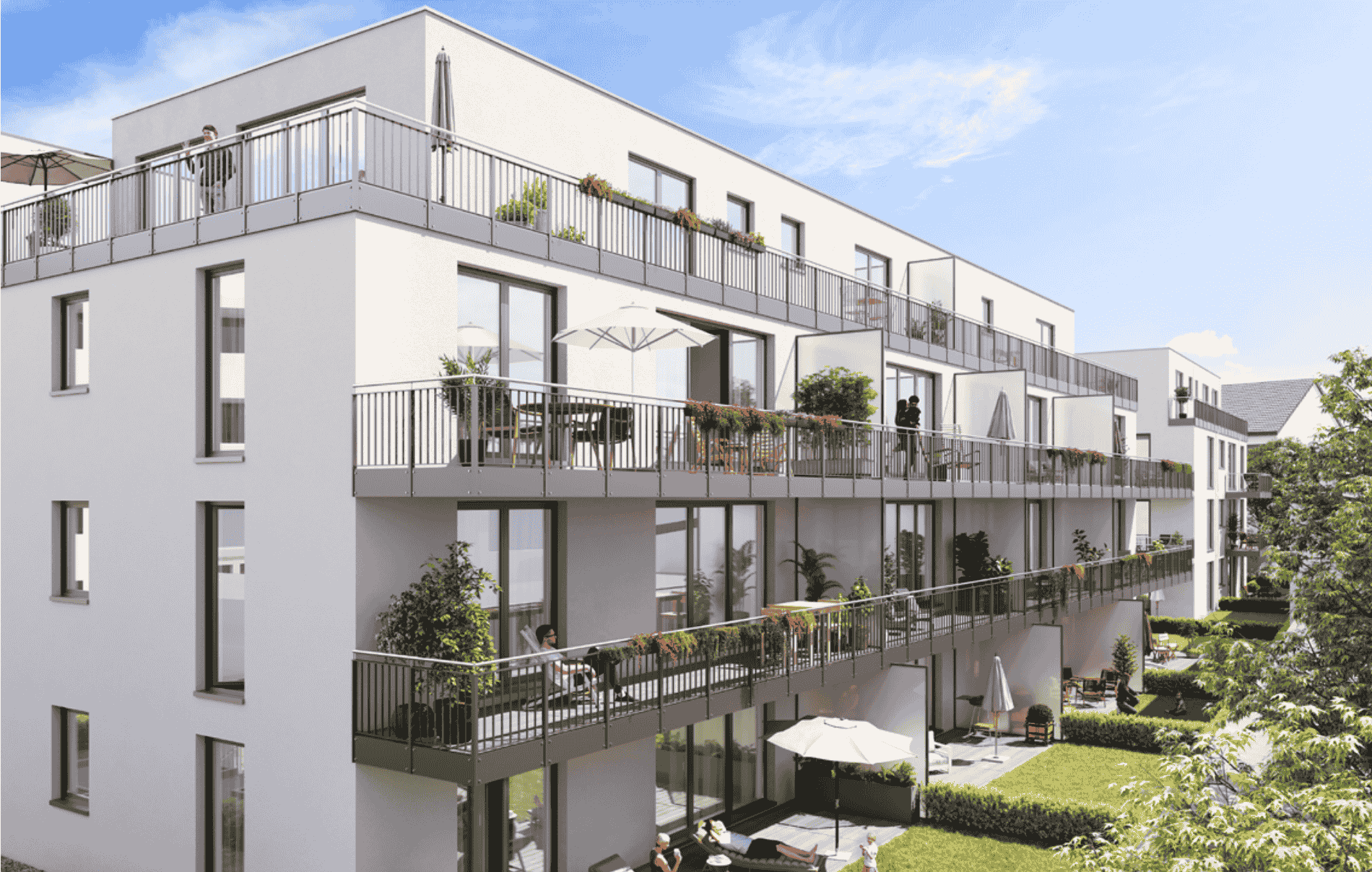
Don't take our word for it.

Marieke Neleman
Netherlands
explained everything clearly and provided a tailored solution

Kristine
Australia
The combination of savings and property gave me a clear path

Ruwen Bussinger
Germany
an honest discussion about our retirement goals
FAQs
It depends on your earnings and years of contribution. Roughly, the state pension covers ~45% of your average lifetime earnings, capped at around €3,500/month for very high earners. Use our calculator above for a personalized estimate.
It depends on the product and employer contribution. If your employer matches contributions, it's usually worth it for the free money. But many bAV products have high fees and poor returns. We can review yours.
Your state pension contributions are preserved — you can claim them from abroad at retirement. EU countries have agreements for combining pension credits. Non-EU is more complex but still possible.
A rental property bought at 35 could be paid off by 65. At that point, it may generate around €800–1,200/month in rental income — illustratively, that could address 50–80% of a typical pension gap, and rental income tends to adjust with inflation over time.
Now. The math is simple: starting 10 years earlier means you need to save roughly half as much per month. A 30-year-old needs €300/month; a 40-year-old needs €600/month for the same outcome.
Our calculators are free. Working with Financemate starts at €99/month with transparent flat fees — no commissions, no product sales. We start with a free discovery call.
Want to explore your pension options?
Book a free call to discuss your retirement planning, or see how property can supplement your pension.